If you own a home on the Gold Coast, white ants are not a question of if — they’re a question of when. The Gold Coast consistently ranks among the highest-risk areas for termite activity in Australia.
I couldn’t recommend Richard highly enough! He was incredibly quick to respond to my initial enquiry and was able to attend my property very promptly. The inspection itself was extremely thorough and in-depth, and Richard went above and beyond to ensure everything was checked thoroughly. His attention to detail, professionalism and communication were exceptional. I wouldn’t hesitate to recommend Richard to anyone needing an inspection!
Read on GoogleI couldn't be happier with the service provided. From the initial inspection through to the completion of the job, everything was handled professionally and thoroughly. The clear communication, and genuine care shown throughout the process were outstanding. The work was completed on time, and all findings and recommendations were explained in a way that was easy to understand. Richard has been great to deal with, he takes pride in his work and delivers exactly what he promises. I highly recommend their services to anyone looking for a reliable, knowledgeable, and professional operator. Thanks again.
Read on GoogleRichard was fantastic. We had another inspector complete a report and give us the all-clear, only to discover severe termite damage halfway through our renovation.Richard came out and carried out an incredibly thorough inspection, identifying issues that had been missed previously and should have been picked up. His knowledge, attention to detail, and professionalism were outstanding.I couldn’t recommend Richard highly enough, especially for anyone needing a pre-purchase or pre-building inspection. We only wish we had found him sooner!
Read on GoogleRichard has been conducting our pest control for the past 5 years since we moved into our house. He completed the initial building and pest in 2021 and installed the termite control system which has been operating perfectly. He responds promptly and always comes out last minute when we need help with the pests as we live on acerage they’re rampant. We haven’t gone with anyone else and don’t need to because we are real happy with Richard and his services.
Read on GoogleNo reviews to show yet.
Termites thrive in warm, humid environments — and the Gold Coast delivers both year-round. With average temperatures between 20–29°C and high annual rainfall, the region provides everything a termite colony needs to grow and spread. Unlike colder southern states where termite activity slows in winter, Gold Coast colonies remain active throughout the year.

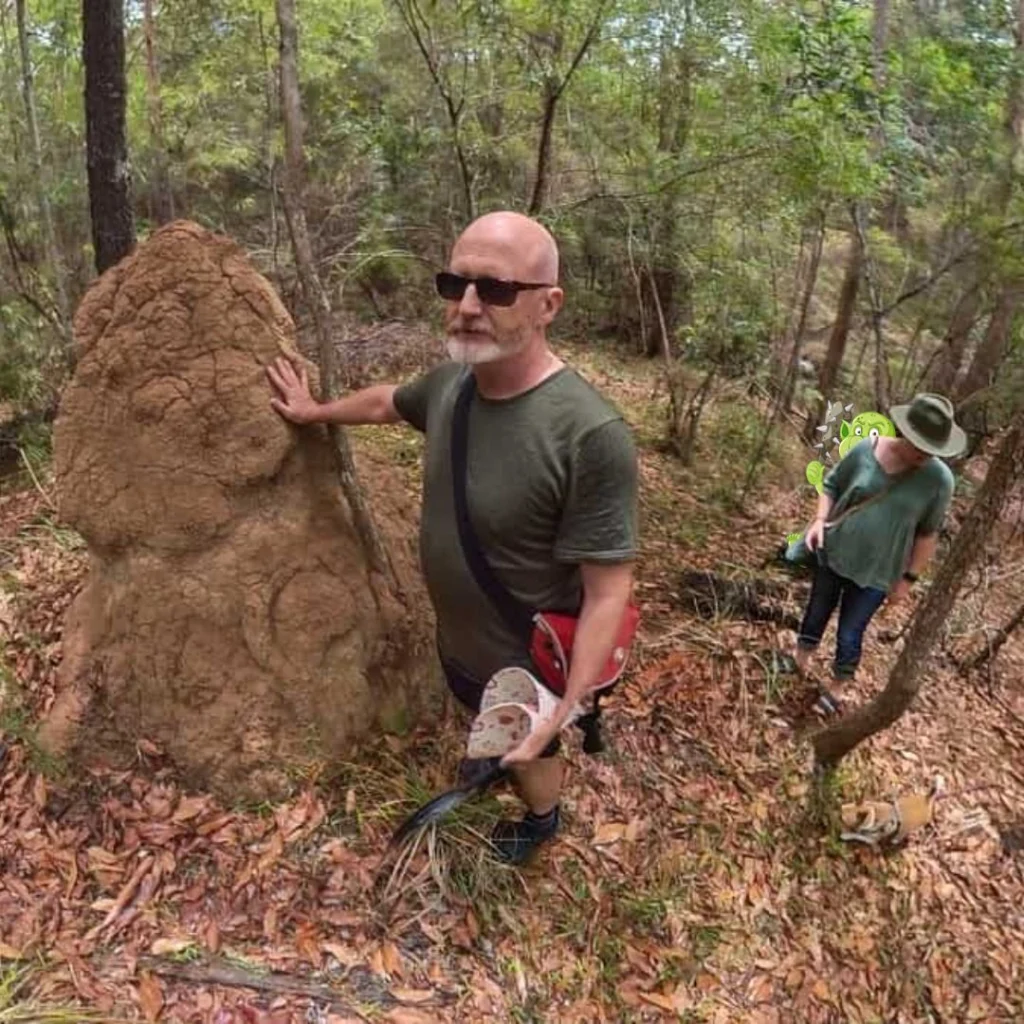
Termite mounds like this look impressive but the termites that live in them aren’t the ones you need to worry about.
The mound builders (like Nasutitermes and Amitermes species) are mostly found in rural and bushland areas. Their mounds are built from soil and their own secretions, and while they can occasionally cause issues, they’re not the main culprits for structural timber damage in homes.
The real threat to Australian homes comes from subterranean termites — particularly Coptotermes species (especially Coptotermes acinaciformis), which are considered one of the most destructive timber pests in the world. They live underground in hidden nests, travel through mud tubes, and are expert at staying concealed while they hollow out structural timbers from the inside. By the time you see the damage, it’s often extensive.
What this mound does remind us is how the local conditions are ideal for termites. This photo was taken at Reedy Creek on the Gold Coast. To ensure you home in protected get a white ant inspection on your Gold Coast home.
The Gold Coast’s sandy loam and clay soils are ideal for subterranean termite colonies. These soil types retain moisture while remaining loose enough for termites to build tunnel systems. Homes built on slabs can still be entered through weepholes in brickwork, cracks in concrete slabs, where plumbing pipes penetrate the slab, and expansion joints.

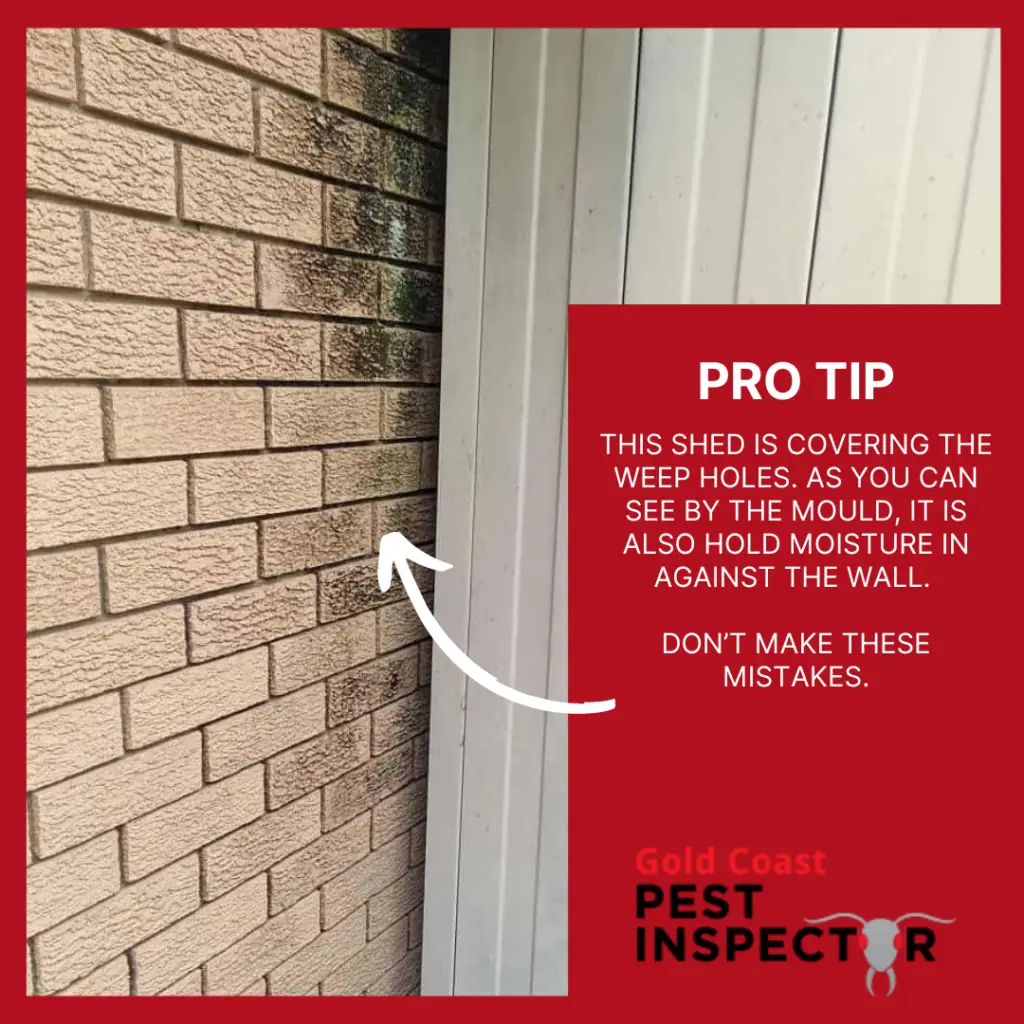
Make sure you’re not covering weep holes or encouraging moisture around your home. This photo provided by Richard Eedy shows a shed that has covered weep holes and encouraged mould growth.
A large percentage of Gold Coast homes — particularly those built before 2000 — are timber-framed or contain significant timber elements including floors, roof trusses, decking, and pergolas. Even brick homes are at risk. Brick veneer construction uses a timber frame behind the brick skin, and termites regularly attack from the subfloor upward without ever being visible from outside.

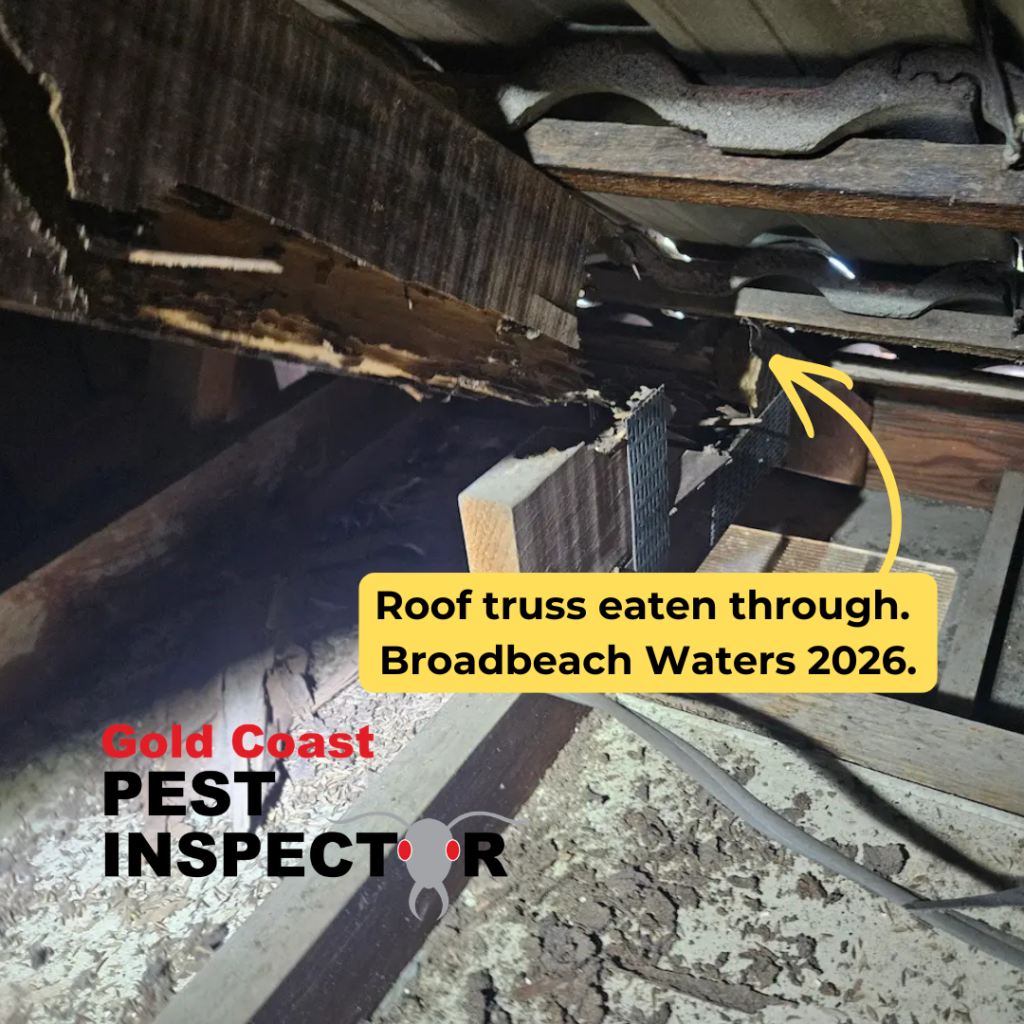
Richard has loads of photos like this, of roof trusses, beams and timbers eaten by termites.
Many Gold Coast properties have conditions that actively attract termites: garden beds against the house retain moisture and provide a direct path to the structure; timber sleepers and retaining walls are a food source; tree stumps and dead roots are common nesting sites; and mulch against foundations creates a high-moisture environment termites love.

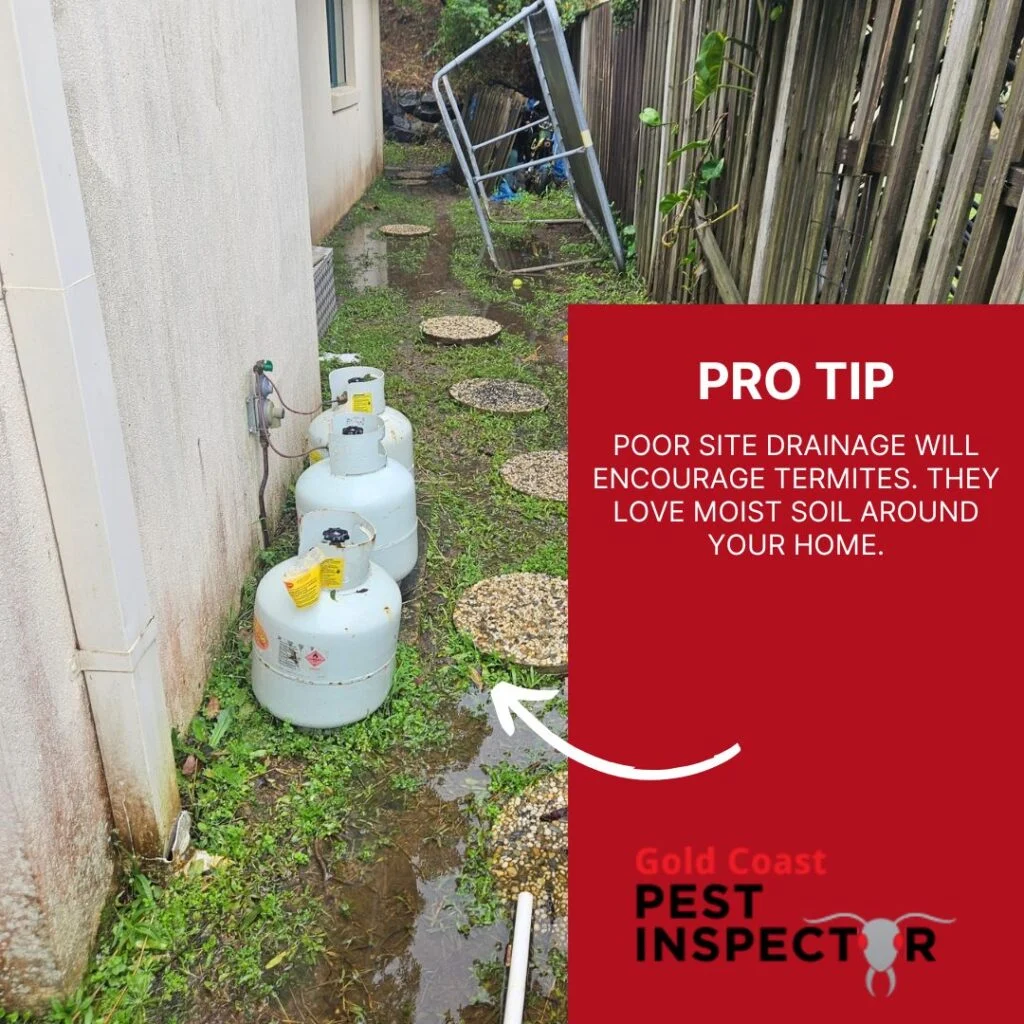
Moist soil encourages termites.
While no suburb is immune, termite pressure tends to be highest in areas with older housing stock, established trees, and higher humidity — including Mudgeeraba, Reedy Creek, Tallebudgera, Nerang, Molendinar, Carrara, Broadbeach Waters, Mermaid Waters, and newer estates like Upper Coomera and Ormeau where native timber was recently cleared.
The most effective protection is a combination of annual inspections and a physical or chemical barrier. Steps to protect your Gold Coast home: annual inspections by a licensed pest inspector; install or recharge a chemical soil barrier; fit a baiting and monitoring system; reduce moisture sources around the home; and remove timber-to-ground contact.
Don’t wait until damage is done. Book a professional white ant inspection and get the right protection in place.